
Automation and AI Are Not the Same Thing
The words automation and AI are often used as if they meant the same thing. They do not, and the difference matters when a business decides where to invest. Automation executes fixed rules: when an invoice is approved, post it; when stock falls below a set level, raise a purchase request. AI handles work that does not follow fixed rules, such as reading a supplier invoice in an unfamiliar layout, understanding the intent of a customer email, or estimating next month's demand from past patterns.
Both drive digital transformation by removing manual work and speeding up decisions. Automation does it for predictable, rule-based tasks. AI extends it to tasks with variation, language, and uncertainty. The UAE National Strategy for Artificial Intelligence 2031 aims to make the country a global leader in AI by 2031, which signals the direction of travel. For a private business, though, the practical question is not whether AI matters. It is where AI earns its place.
Digital transformation consulting services in UAE help businesses answer that question by starting from the process and the data, not from the technology. This guide covers where automation and AI each add value, what must be in place first, a hypothetical example, and a cautious way to start.
Automation does what you tell it to do. AI makes a judgement about what to do. Each needs a clear process and reliable data before it can be trusted.
Where Automation Drives Transformation
Rule-based automation is the most mature and lowest-risk place to start. Typical uses in UAE businesses include these.
• Approval workflows: Purchase orders, discounts, and expense claims routed to the right approver by value and category, with every decision recorded.
• Data synchronisation: Customer, order, and invoice data moved between systems automatically, which ends re-keying.
• Reminders and notifications: Overdue invoice reminders, renewal alerts, and expiry notices sent on schedule without anyone having to remember.
• Report distribution: Dashboards and reports refreshed and sent to the right people at fixed times.
• Onboarding and offboarding: Standard steps for new customers, suppliers, or employees triggered once and tracked to completion.
Platforms such as Microsoft Power Automate can connect these steps across the systems a business already uses, which is why automation often delivers visible results within weeks.
Where AI Adds Value
AI is most useful where the input is messy or the answer is a prediction. Each use below works best with a person reviewing the result.
• Reading documents: Extracting fields from supplier invoices, delivery notes, or forms, with low-confidence items sent to a person.
• Handling enquiries: Sorting incoming customer emails and drafting replies for a team member to check and send.
• Forecasting: Estimating demand, cash flow, or workload from historical data, as an input to planning rather than a replacement for it.
• Spotting anomalies: Flagging unusual transactions, duplicate invoices, or sudden changes in patterns for review.
• Summarising information: Condensing long reports, contracts, or meeting notes so that staff can find the important points faster.
AI output can be wrong in confident-sounding ways. For any task where a mistake is costly, design a human check into the process and measure the error rate rather than assuming it is low.
How AI and Automation Work Together
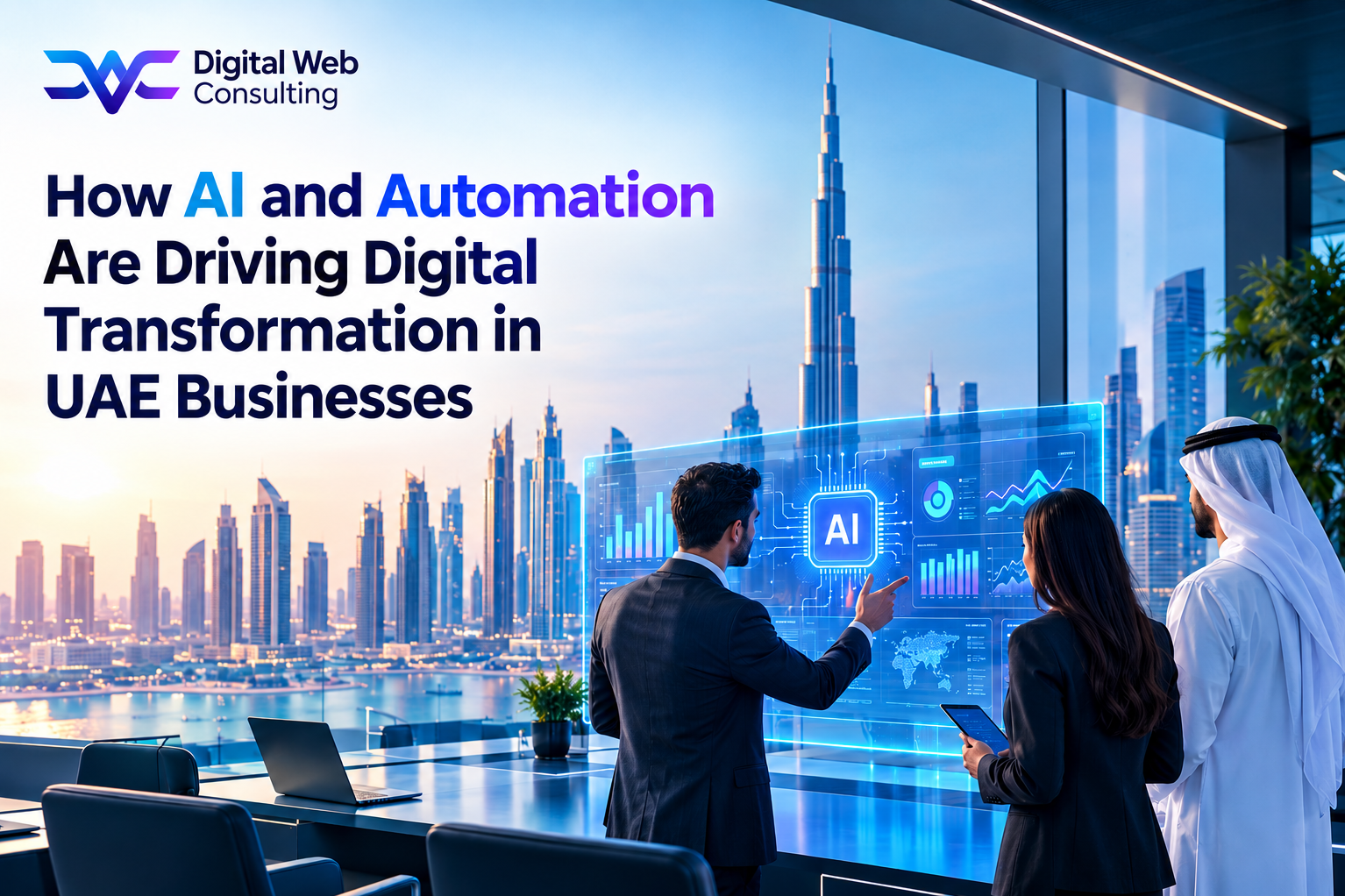
In practice the two are usually combined in one process, with each doing the part it suits. A useful pattern has three roles: AI interprets, automation executes, and people decide the exceptions.
Take incoming customer enquiries as an illustration. AI reads each email and classifies its type and urgency. Automation routes it to the right team, logs it in the CRM, and starts a response timer. A team member reviews the drafted reply, adjusts it, and sends it. If the message is unusual or sensitive, it goes straight to a person. Each part does what it does best, and the person keeps responsibility for the outcome.
What Must Be in Place First
Neither automation nor AI rescues a weak foundation. Five things should be in place before investing.
• Connected, reliable data: AI and automation work on the data they are given, so cleaning and connecting it comes first.
• A standardised process: Automating an inconsistent process produces inconsistent results faster.
• A named owner: One person is accountable for the result and for deciding when a human must step in.
• A measurable use case: A defined task with a baseline, so that improvement can be shown.
• Rules for confidential data: Decide which data may be sent to which AI service. UAE data protection rules apply to personal data, so confirm obligations with legal counsel.
A Hypothetical Example: Supplier Invoice Processing
The scenario below is hypothetical and uses no real figures. A Dubai distribution company receives supplier invoices by email as PDFs in many layouts. Staff retype each one into the ERP, match it against the purchase order and goods receipt, and chase approvals by email.
• AI step: A document-reading tool extracts the invoice number, date, supplier, lines, and VAT amount. Items it is unsure about go to a person to check.
• Automation steps: A workflow matches the invoice to the purchase order and goods receipt, flags mismatches, routes approvals by value, and posts approved invoices to the ERP.
• Human steps: Accounts payable reviews exceptions and low-confidence extractions, and approvers decide on flagged items.
The company would record the baseline first, covering time per invoice, errors per month, and the share needing correction. After a pilot period it would compare the same measures before deciding whether to extend the approach to other documents.
What Changes for Staff
Automation and AI change the shape of the work more than they remove it. Routine entry and chasing shrink, and checking exceptions, handling unusual cases, and analysing results grow. That shift only works when people are told what is changing, trained for the new tasks, and given authority to override the system.
Staff who understand why a process is being automated, and who help define the exceptions, tend to find the problems early. Staff who are surprised by it tend to work around it. Involving the people who do the task today is therefore part of the design, not an afterthought.
A Cautious Four-Step Path to Start
• Choose one process: Pick a high-volume task with clear rules and a visible cost, such as invoice handling or approvals.
• Record the baseline: Measure time, errors, and volume before changing anything.
• Run a pilot with human review: Keep a person checking results until the error rate is understood and acceptable.
• Scale on evidence: Extend to the next process only after the measured results justify it.
Our AI Automation Solutions and Business Automation Solutions follow this path, and our Digital Transformation Consulting service decides where in the wider programme they belong.
Questions to Ask Before Buying Any AI Tool
Tools in this area are marketed generously. These questions separate a useful tool from a promising demonstration.
• What task will it do, and which measure will show it works?: A tool without a measure cannot be judged.
• What data does it need, and where does that data go?: The answer determines the confidentiality and legal position.
• How is accuracy measured, and what is the error rate on our own documents?: Test with real samples, not the supplier's examples.
• What happens when it is wrong?: A good design catches errors before they reach a customer or the accounts.
• Can we switch it off?: The business should be able to revert to the manual process if it must.
Managing the Risks
• Accuracy: Measure errors and keep a human check wherever mistakes are costly.
• Confidentiality: Keep personal and sensitive data within services that meet legal and contractual requirements.
• Over-reliance: Keep staff able to do the task manually, so that the business is not stranded if a tool fails.
• Accountability: A named person owns each AI-assisted decision, because the tool cannot be held responsible.
Automation and AI as Tools, Not Strategy
Automation and AI are powerful instruments of digital transformation, but they are instruments. Automation removes rule-based manual work. AI extends that to messy inputs and predictions. Both depend on connected data, standard processes, and human oversight.
Digital transformation consulting services in UAE help a business place them where they pay back, in the order that builds on what is already in place. A useful first step is to list the three most repetitive, high-volume tasks in the business and ask which are rule-based and which involve judgement or messy inputs.
Ready to find where automation and AI would pay back in your business? Start the conversation with Digital Web Consulting through our Digital Transformation Consulting Services page
[digital transformation consulting services in UAE , digital transformation services Dubai , transformation consulting UAE , digital consulting UAE]